

Conceptual core of military discourse based on interviews with participants of the special military operation

https://doi.org/10.18384/2949-5075-2025-5-80-99
Abstract
Aim. The article aims to study the conceptual core of military discourse based on interviews with participants of the special military operation.
Methodology. The study employs methods of conceptual metaphor analysis and critical discourse analysis, utilizing corpus analysis to identify key concepts forming the semantic foundation of military discourse.
Results. The research demonstrates that the conceptual core of the special military operation discourse is structured around key concepts such as WAR, LIFE, FEAR, HEROISM, and HOMELAND. These concepts perform cognitive regulatory functions in shaping the participants' perceptions of military actions, allowing them to comprehend and interpret the events of the special military operation. Metaphorical structures such as “WAR is а LIVING BEING”, “LIFE is a TROPHY”, and “FEAR is anINTERNAL ENEMY” play a crucial role in the formation of collective identity and moral resilience.
Research implications. The article emphasizes the role of cognitive linguistics in the analysis of military discourse, demonstrating how the metaphorical understanding of fundamental concepts such as WAR, LIFE, FEAR, HEROISM, and HOMELAND shapes the perception of reality among participants of the special military operation. The study highlights how language, as a conceptualization tool, reflects the interaction between institutional norms and personal experiences, endowing the events of the conflict with specific meaning and motivation.
About the Author
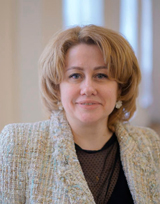
S. V. Shermazanova
Prince Alexander Nevsky Military University of the Ministry of Defense of the Russian Federation
Russian Federation
Russian Federation
Shermazanova Svetlana Victorovna – Cand. Sci. (Sociology), Assoc. Prof., Prof., Department of Foreign Languages
Moscow
References
1. Mishkurov, E.N. (2020). Modern military-political discourse: nomination, functions, language deviation, translation. In: Moscow University Translation Studies Bulletin, 2, 88–105 (in Russ.).
2. Naumova, K.A. (2022). Specificity of hybrid types of discourse (on the example of military-political and military-journalistic discourses) [dissertation]. Moscow (in Russ.).
3. Fedotov, I.I. (2023). Military-political discourse as a form of embodiment of oral and written speech works. In: The Humanities and Social Sciences, 97 (2), 111–118. DOI: 10.18522/2070-1403-2023-97-2-111-118 (in Russ.).
4. Shashok, L.A. (2018). Peculiarities of military discourse (on the basis of linguistic research done by Russian scholars). In: Political Linguistics, 6 (72), 116–119. DOI: 10.26170/pl18-06-16 (in Russ.).
5. Tkacheva, Ju.G. & Cherenkov, V.A. (2024). Cognitive features of military discourse: in the aspect of equivalent translation. In: Research and practice in the socio-economic and humanitarian spheres: a collection of articles from the XXIV All-Russian (National) Scientific Conference (St. Petersburg, March 11, 2024). St.Petersburg: National Humanitarian Research Institute "NATSRZAVITIE" publ., pp.18–22 (in Russ.).
6. Kalinin, O.I. (2024). Information warfare from the standpoint of the cognitive-discursive approach. In: Information warfare in the context of a special military operation. Experience of linguistic analysis. Moscow: FLINTA publ., pp.57–61 (in Russ.).
7. Kibrik, A.A. (2003). Discourse analysis in cognitive perspective [dissertation]. Moscow (in Russ.).
8. Wodak, R. (2006). Mediation between discourse and society: assessing cognitive approaches in CDA. In: Discourse Studies, 8 (1), 179–190. DOI: 10.1177/1461445606059566.
9. Van Dijk, T.A. (2008). Discourse and context. A sociocognitive approach. Cambridge, UK: Cambridge University Press.
10. Budaev, E.V. (2011). Comparative Political Metaphorology. Nizhny Tagil: Russian State Vocational Pedagogical University publ. (in Russ.).
11. Kubryakova, E.S. (2000). On the concepts of discourse and discourse analysis in modern linguistics. In: Discourse, speech, speech activity: functional and structural aspects. Moscow: INION RAS publ., pp.5–13 (in Russ.).
12. Shevtsova, V.M. (2015). Discourse as an object of pragmatics studies. In: Magic of INNO: new in the study of language and methods of its teaching: materials of the Second scientific and practical conference (Moscow, April 24-25, 2015). Moscow: MGIMO University publ., pp.482–486 (in Russ.).
13. Iriskhanova, O.K. (2004). Linguistic and creative foundations of the theory of nominalization [dissertation]. Moscow (in Russ.).
14. Kövecses, Z. (2018). Metaphor in media language and cognition: A perspective from conceptual metaphor theory. In: Lege Artis. Language yesterday, today, tomorrow, III (1), 124–141. DOI: 10.2478/lart-2018-0004.
15. Kalinin, O.I. (2023). Metaphor Power in the US-China Trade War Discourse. In: Vestnik NSU. Series: Linguistics and Intercultural Communication, 21 (4), 70–84. DOI: 10.25205/1818-7935-2023-21-4-70-84 (in Russ.).
16. Fedulova, M.N. (2017). Categories of discourse and concept in the context of issues of perception, comprehension and interpretation. In: Bulletin of the South Ural State University. Ser. Linguistics, 14 (2), 50–56. DOI: 10.14529/ling170207 (in Russ.).
17. Alefirenko, N.F. (2009). “The Living Word”: Problems of Functional Lexicology. Moscow: Flinta publ., Nauka publ. (in Russ.).
18. Vardzelashvili, Zh.A. (2005). Linguistic representation of cognitive models (nanoscale aspect). In: Comparison as a method of language research and teaching: collected papers from the International Conference MAPRYAL (Tbilisi). Vol. I. St.Petersburg: MAPRYAL (International Association of Teachers of Russian Language and Literature) publ., pp.113–120 (in Russ.).
19. Demyankov, V.Z. (comp.) (1982). Notebooks of new terms. No. 39: English-Russian terms in applied linguistics and automatic text processing. Iss. 2. Methods of text analysis. Moscow: Vsesoyuznyy tsentr perevodov publ. (in Russ.).
20. Epifanova, T.V. (2024). On the Intertextuality of Modern Military Discourse. In: Bulletin of Luhansk State Pedagogical University. Series: Philological Sciences, 4 (121), 17–23 (in Russ.).
21. Sanieva, A.Yu. & Sidorova, N.A. (2025). The research of the conflict military and political discourse implemented in the communicative space of different linguistic cultures. In: Key Issues of Contemporary Linguistics, S1, 43–53. DOI: 10.18384/2949-5075-2025-S1-43-53 (in Russ.).
22. Krivov, S.V. (2024). Discourses of identity in the context of a special military operation: towards the formulation of the problem. In: Mechanisms for strengthening the ethnocultural and civic identity of the multinational people of the Russian Federation: Proceedings of the All-Russian scientific and practical conference (Karachaevsk, September 12–13, 2024). Karachaevsk: Umar Aliev Karachai-Cherkess State University publ., pp.81–87.
23. Durmaz, N.O. (2024). Linguistic personality of a professional sphere on the example of a military discourse. In: Bulletin of Yaroslavl Higher Military Institute of the Air Defense, 5 (29), 57–62 (in Russ.).
24. Britov, I.V. (2022). Russia's special military operation in Ukraine: Vietnam’s stance. In: Russia and the contemporary world, 4 (117), 65–79. DOI: 10.31249/rsm/2022.04.04 (in Russ.).
25. Kalinin, O.I. (2024). The Image of Russia in the Discourse of Chinese Social Networks: A Linguopragmatic Analysis of the Russia–Ukraine Conflict Representation. In: Vestnik of Northern (Arctic) Federal University Series “Humanitarian and Social Sciences”, 24 (6), 83–91. DOI: 10.37482/2687-1505-V392 (in Russ.).
Review
Views:
349
JATS XML




 Email this article
